Optionsfor the Future
Engagement Round 2
Over the last few months, we have been listening to and learning from members of the public - over 6,600 of you!
You told us what you love about Knoxville, what you want to retain, and what you think should change. Now we want you to help us prioritize what we heard earlier this year.
Take the survey if you're ready, or learn a little more below.
Housing Types
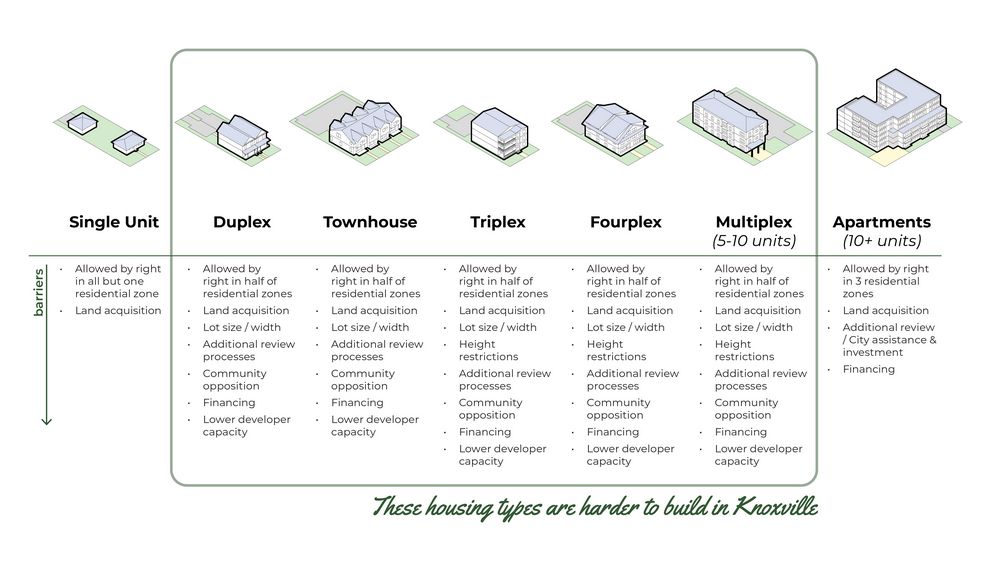
In recent years, large multi-unit apartment buildings have made up a majority of new housing.
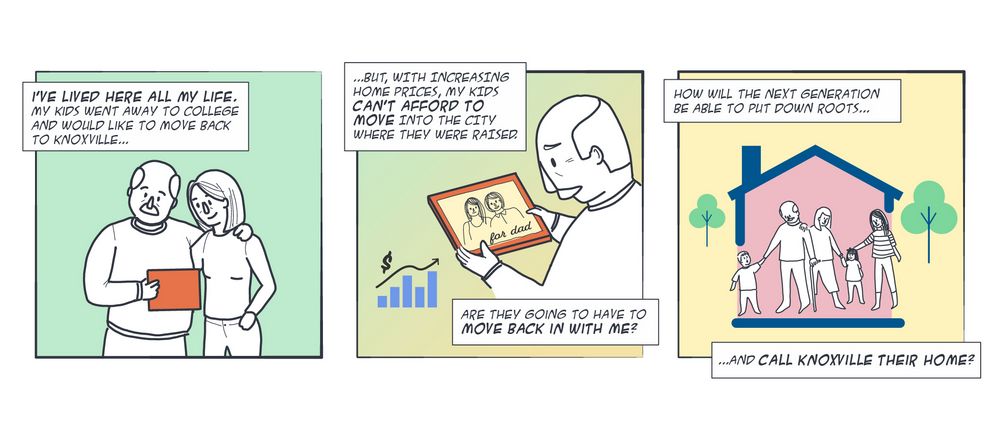
We need more housing and more types of housing. We need a diversity of housing to meet the needs of a diverse population but today it is more difficult to build anything except single-unit housing or large apartment buildings.
Work Space Types
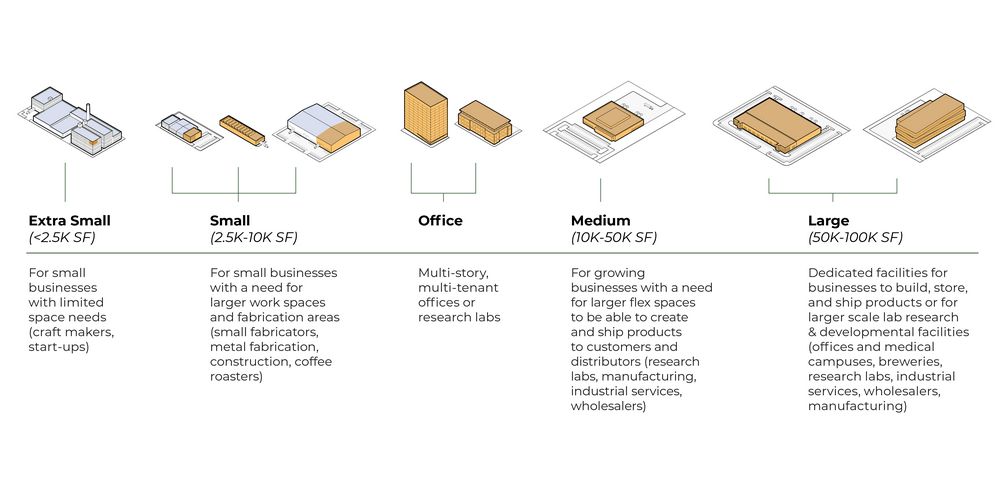
Jobs are growing, with regional jobs increasing at an even faster rate.
We need to make space for jobs. Some of this can be captured in the city, making it critical to preserve land for the jobs to be created in the next 25 years.
Corridor Challenges
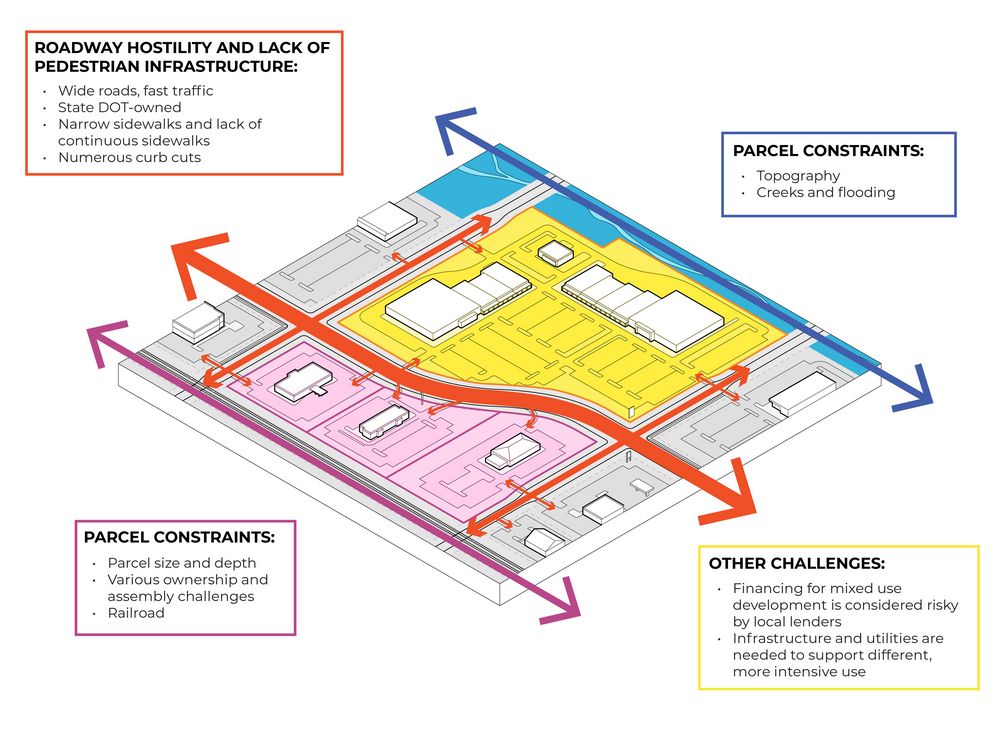
Corridors provide opportunities but are challenging and expensive to redevelop.
Some commercial corridors could be home to new housing and services. However, developing new housing on an empty commercial site is extremely expensive and difficult due to the cost of infrastructure, site assembly, lack of banks willing to finance the project and more. Different corridors will need different tools and levels of public investment to spur development.
Neighborhood Commercial
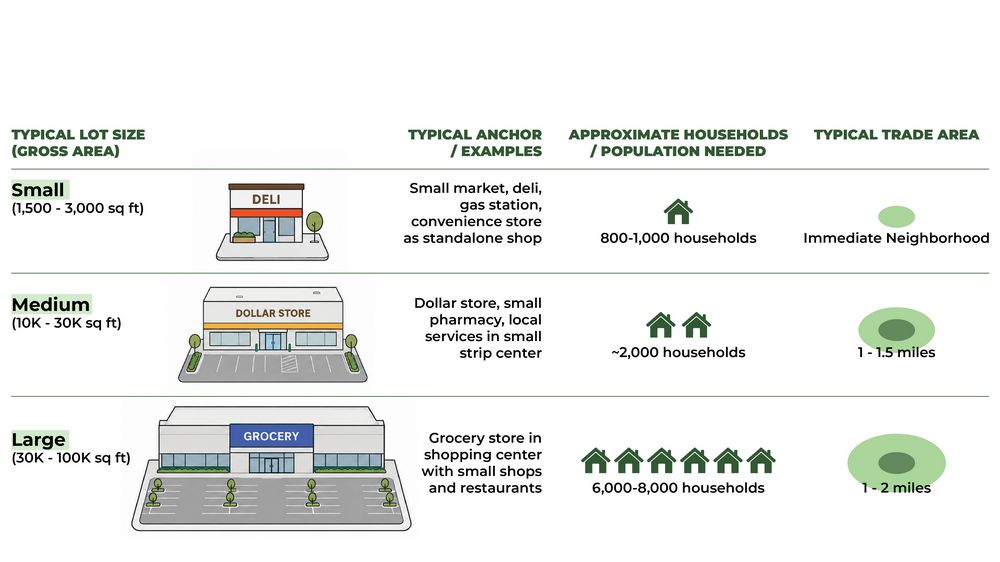
Neighborhood commercial is desirable but retail can't go everywhere.
Household density and spending power is needed to support it.
We need you to weigh in!
Our Comprehensive Plan is like a recipe for the future of our city, made up of a variety of ingredients (scenario elements) in differing proportions.
No single scenario element will be able to fully support the plan’s vision, so we need you to weigh in on how much of each element should be included in the recipe to achieve our vision.
Scenario Elements
Take the survey to tell us what you think and why
Your input will help us determine how much of each of the scenarios is used in a final, preferred scenario in the Comprehensive Plan.
- Scenario 1: Downtown and High Market Areas
Expand downtown to include the Covenant Health Park area and push investment in high market potential areas with high-intensity residential, commercial, and mixed-use development - Scenario 2: Corridor Redevelopment
Initiate public investment along corridors with varying levels of existing infrastructure and investment - Scenario 4: Neighborhood Infill A
Policy changes to expand small-scale multi-unit housing by right in areas with infrastructure and assets - Scenario 5: Neighborhood Infill B
Policy change to allow gentle increase in housing units through accessory dwelling units and smaller lot sizes in single-unit zoning districts and allow small-scale multi-unit housing by right on designated secondary corridors
The draft vision and goals are crafted from the key themes we heard from the public over the spring and summer. The vision describes our aspirations for what we as a city will be in the future while not losing sight of what makes Knoxville, Knoxville. The goals guide our strategies and actions.
Draft Vision for 2050
Knoxville combines small-town warmth and big-city opportunity.
We are a dynamic city that is intentional about how we grow, where businesses thrive and people of all ages are connected to nature, culture, and one another.
Goals
- Shape growth strategically
- Strengthen neighborhoods for all ages
- Connect neighborhoods and destinations
- Grow and diversify the economy
- Promote equitable investment
- Bolster history, heritage, and culture
- Expand access to parks and community spaces
- Protect natural resources
- Invest in resilient infrastructure
- Provide clear, predictable development process
Here's what we must keep in mind as we plan for the future...
Knoxville is growing and is projected to continue to grow.
A total of between 230,000 and 240,000 people are projected by 2050, from over 202,000 in 2025. This means an estimated 14,500 to 19,500 additional housing units.
Knoxville's parks and access to nature define the city.
As the city grows, parkland will need to grow to maintain targets identified by the City, and we will need to be intentional about growing in areas that are developed to preserve open space and natural areas where possible.
Land use impacts the City's budget.
Concerned about infrastructure? We heard you. To get better roads, sidewalks, stormwater management, and more trees (and parks!) requires more people and jobs to spread the cost of those investments.
Knoxville is growing...
How can we shape it?
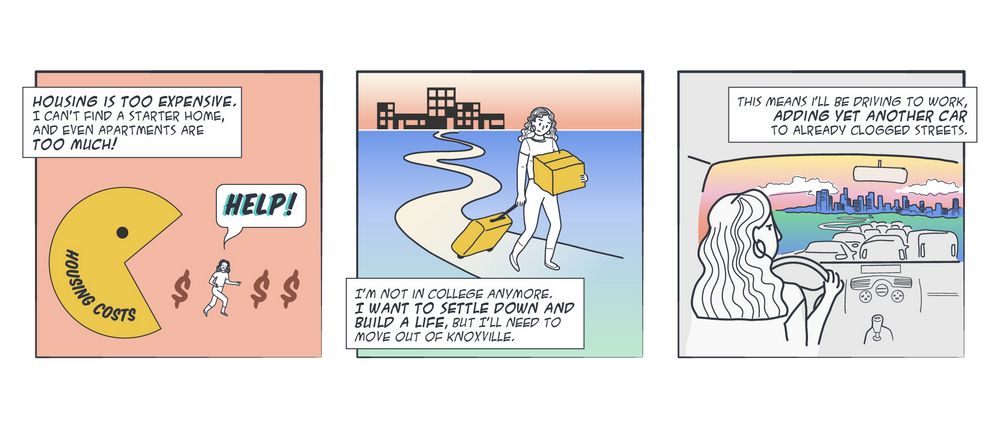
Growth has brought many positive changes to the city: a more modern economy; a younger workforce; more retail options; and more parks and outdoor recreation opportunities. However, it has also put pressure on the housing market, contributing to a growing mismatch between housing supply, the mix of housing types, and household needs. This impacts affordability and has spurred development in rural and natural areas, putting strain on infrastructure.
Undeveloped land
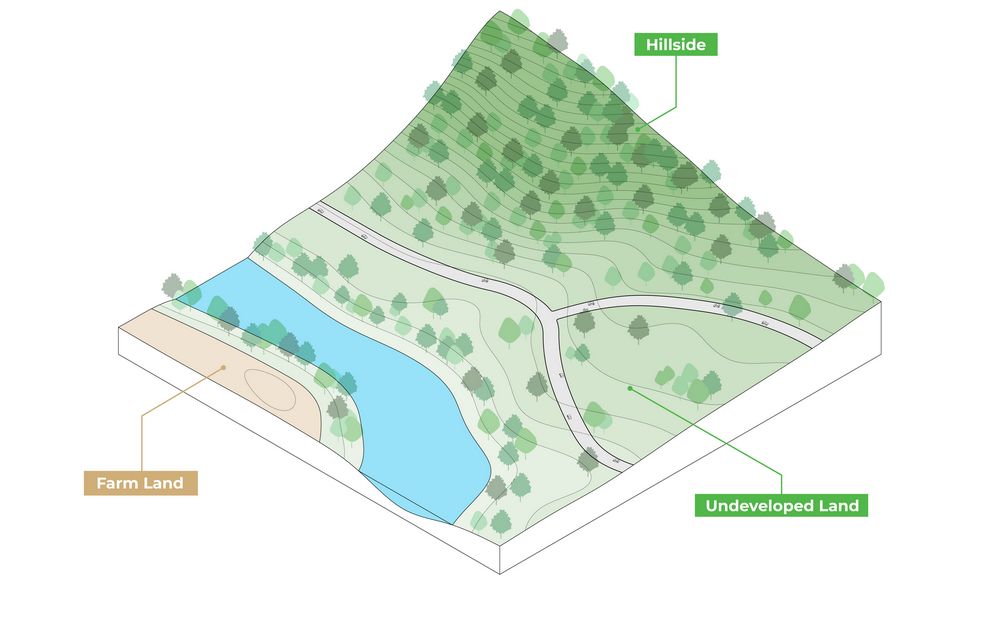
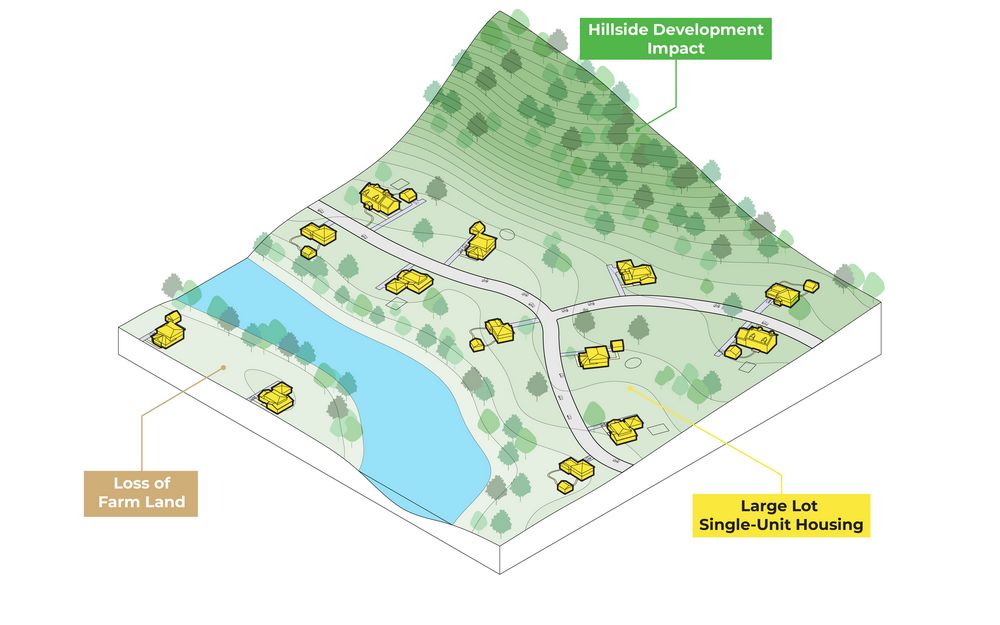
What if we continue the existing pattern?
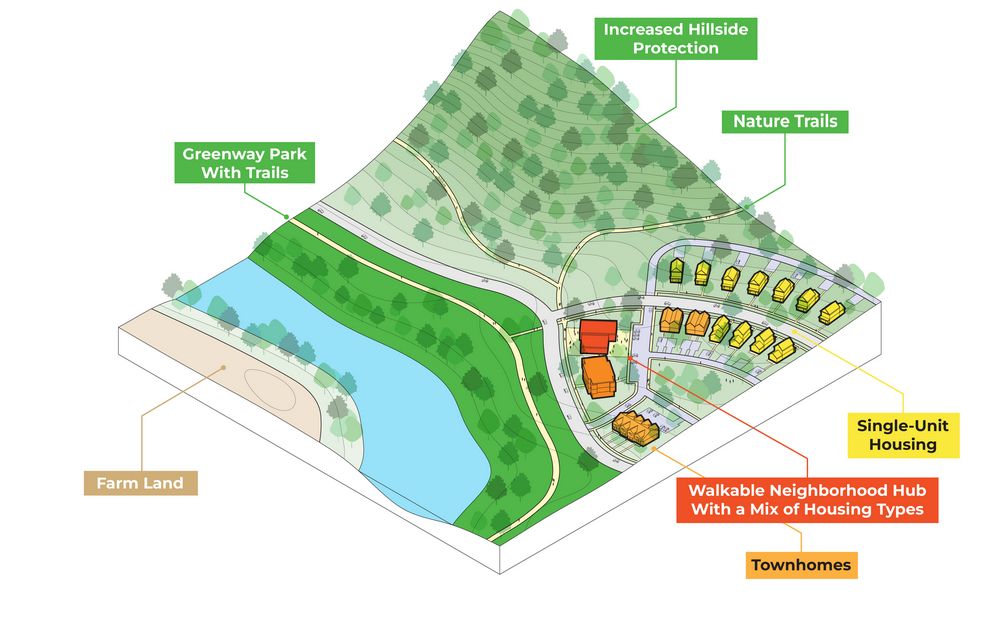
This means growth will continue to be mainly large-scale, multi-unit development where the market is strongest and single-unit development on undeveloped, rural, and forested land. Housing will continue to be out of reach for many, especially the younger generation. Pushing development further out will continue to exacerbate traffic and increase carbon emissions, strain infrastructure, and impact property taxes and utility costs.
What if we made choices that guided that growth?
Based upon the draft vision and goals, three main drivers were identified that can shape what the future looks like:
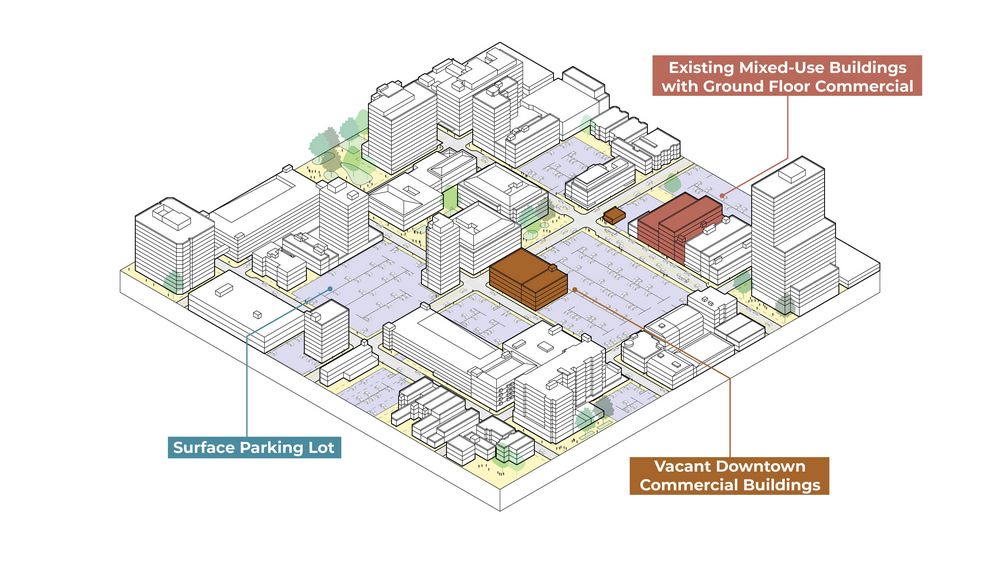
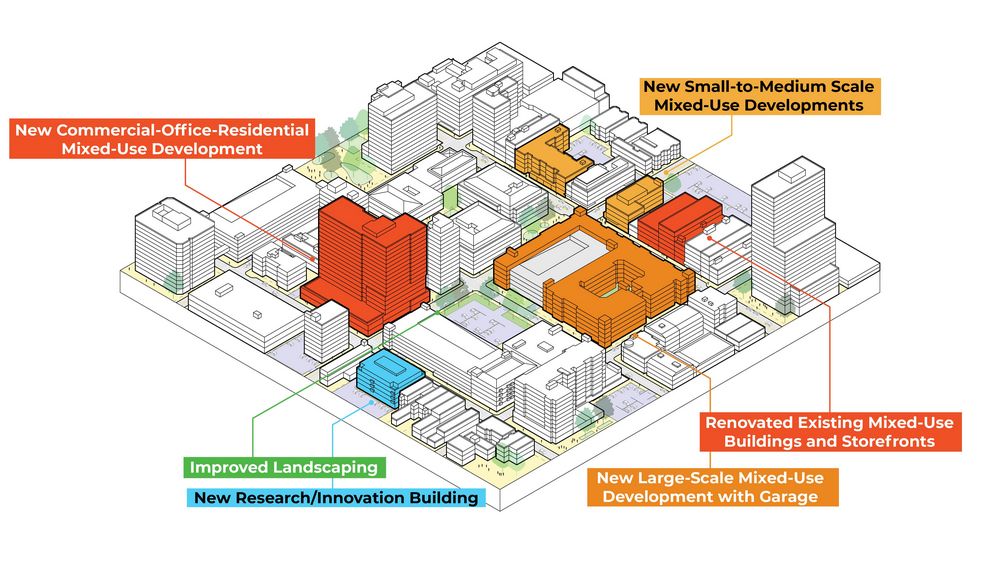
- DOWNTOWN AND HIGH MARKET DEMAND will focus on market-driven public investment to expand high market areas that are already in demand | 9,000-13,000 estimated housing units
- CORRIDOR REDEVELOPMENT will require significant public investment to focus on key corridors that create new, denser neighborhood hubs | 2,500-7,000 estimated housing units
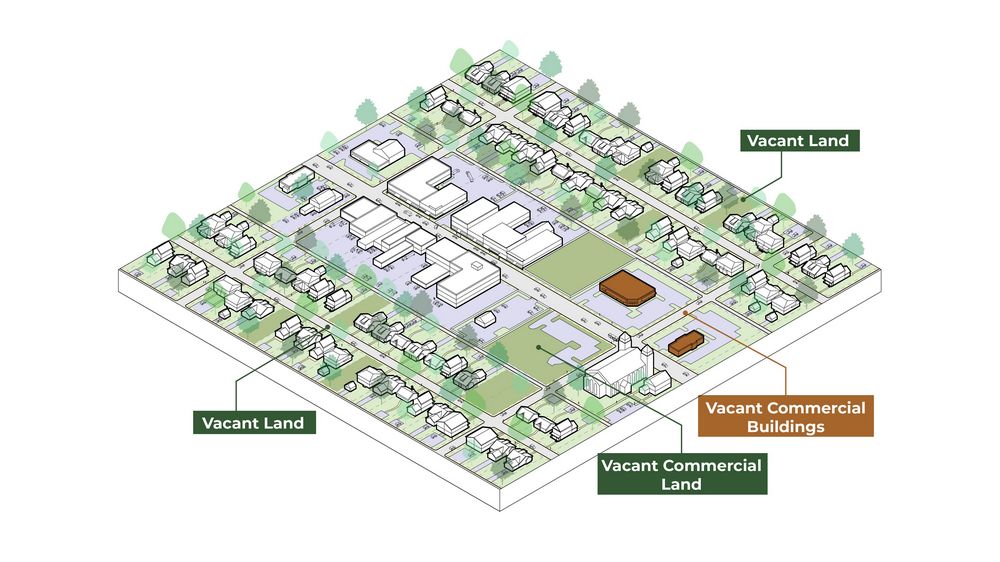
- NEIGHBORHOOD INFILL will rely on policy changes to create opportunities for gradual change that expands a variety of housing | 6,500-10,500 estimated housing units
Urban High-Intensity Development
Before
After
Walkable Commercial Corridor
Before
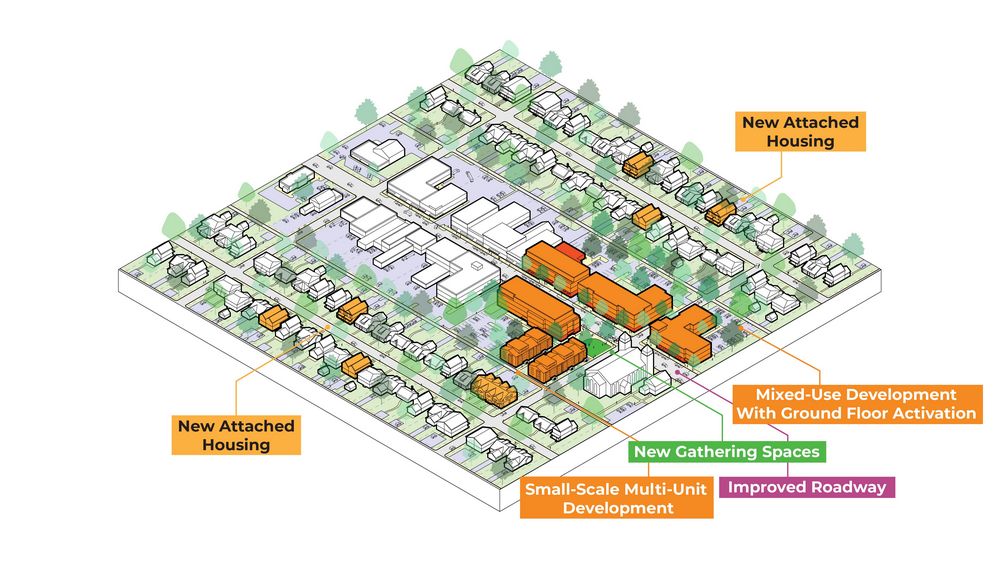
After
Urban Commercial Corridor
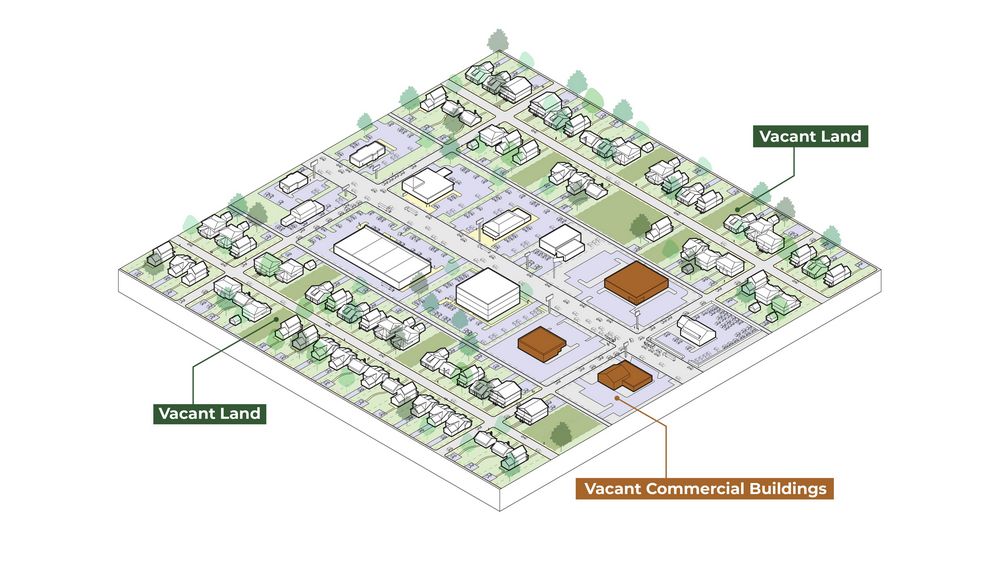
Before
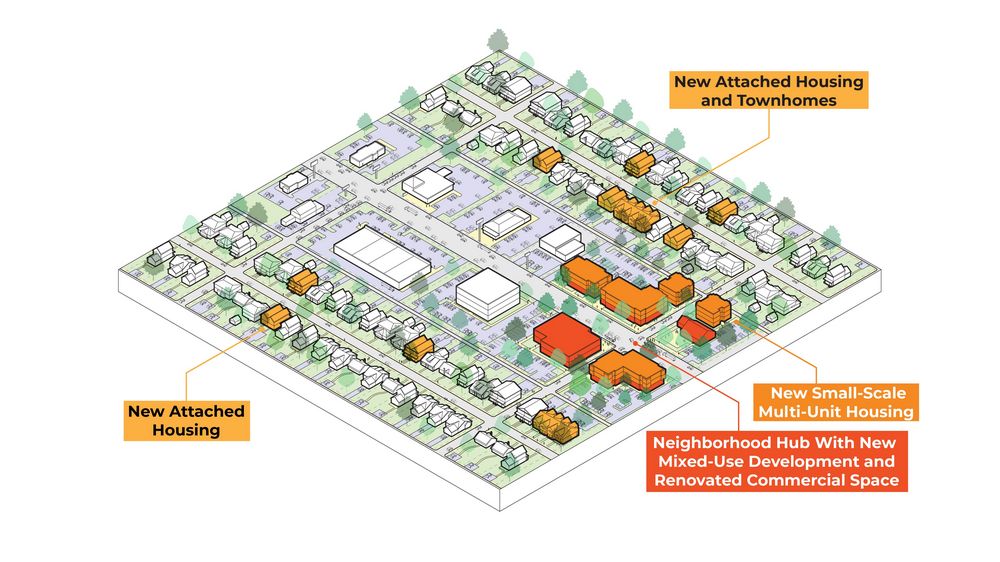
After
Suburban Commercial Corridor
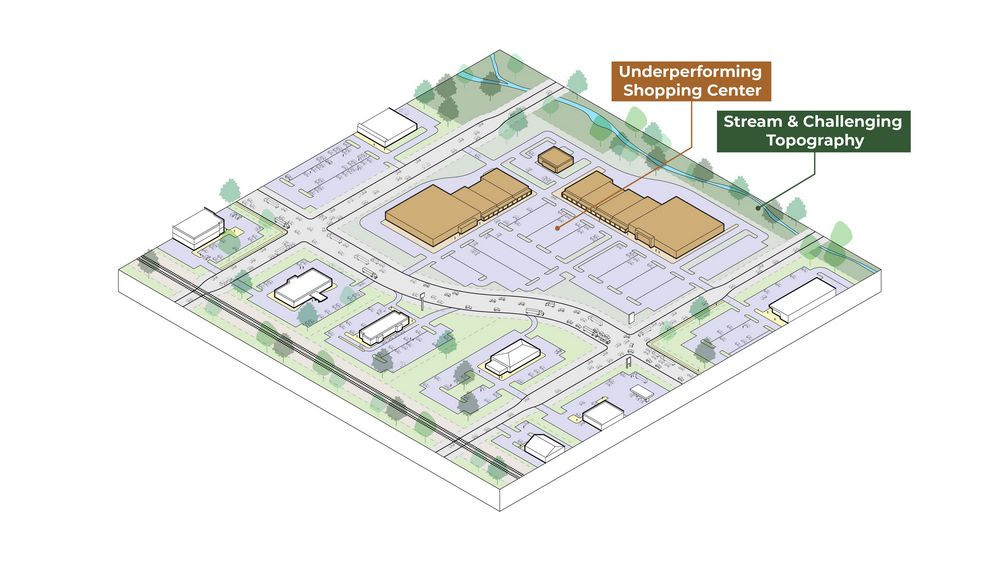
Before
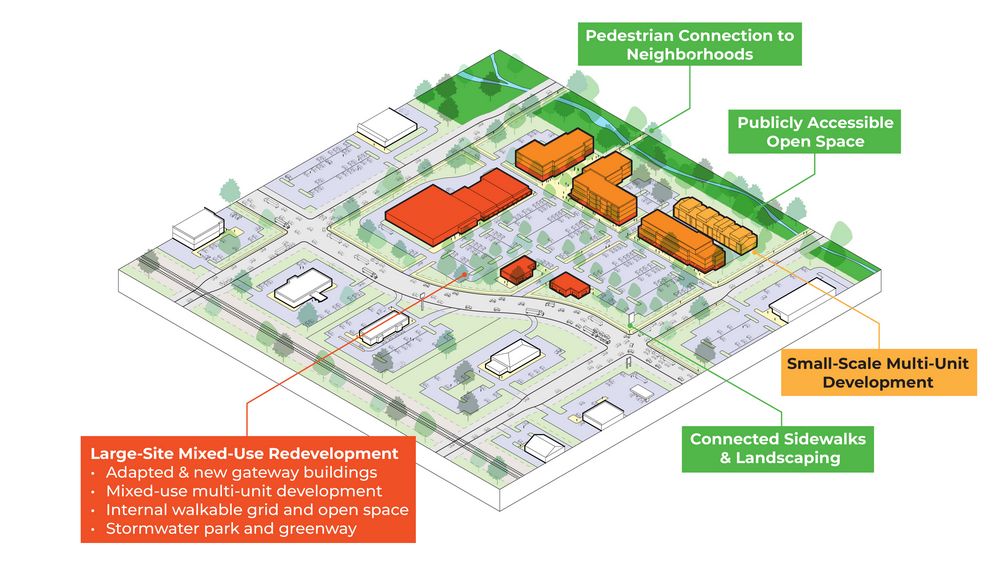
After
Suburban Residential Neighborhoods
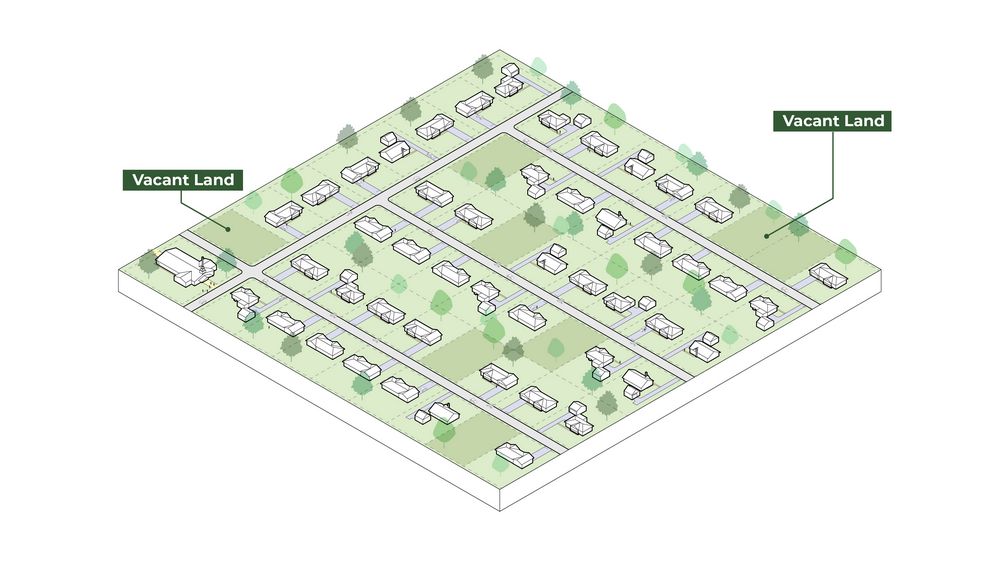
Before
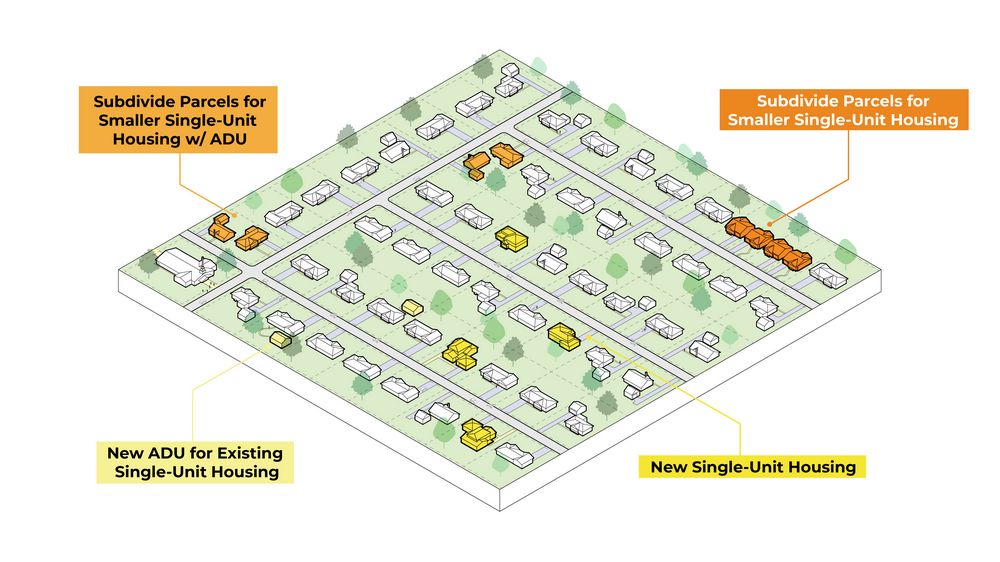
After
Urban Mixed Residential Neighborhoods
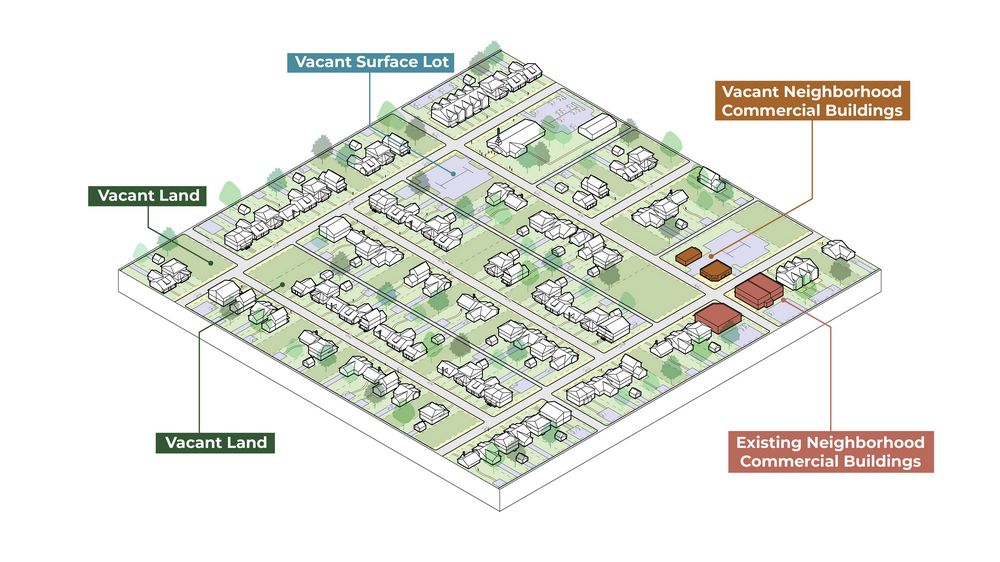
Before
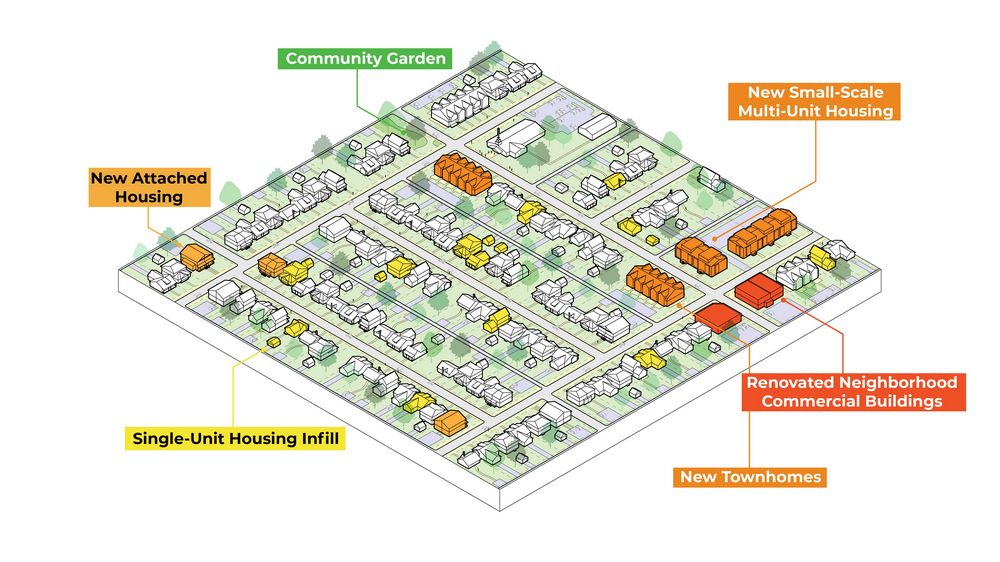
After
Scenario #1: Downtown and High Market Areas
Expand downtown to include the Covenant Health Park area and push investment in high market potential areas with high-intensity residential, commercial, and mixed-use development
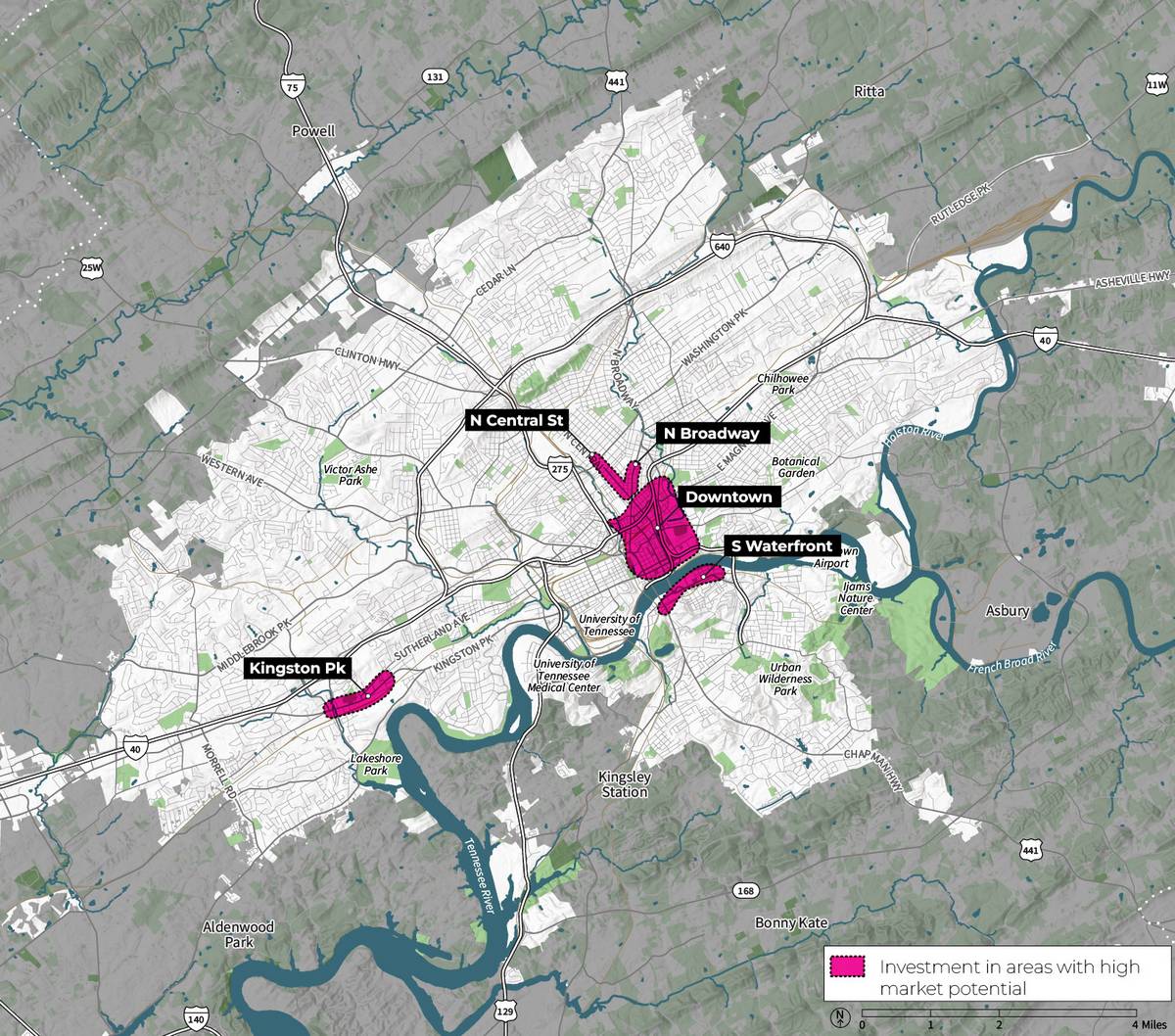
Place types
Cost: $$
$=Minimal - $$$$$=Very High
- Some level of public investment for potential site assembly, cleanup, infrastructure and more with increases to the tax base and higher net revenue generation over time
Impacts on our city
- Increases the number of housing units, mostly in large apartment buildings
- Provides more opportunities for walking, biking, and transit in city's strongest centers of activity
- Opportunity for job growth in these areas, but will compete with housing
Scenario #2: Corridor Redevelopment
Significant public investment along corridors with some level of existing infrastructure and investment
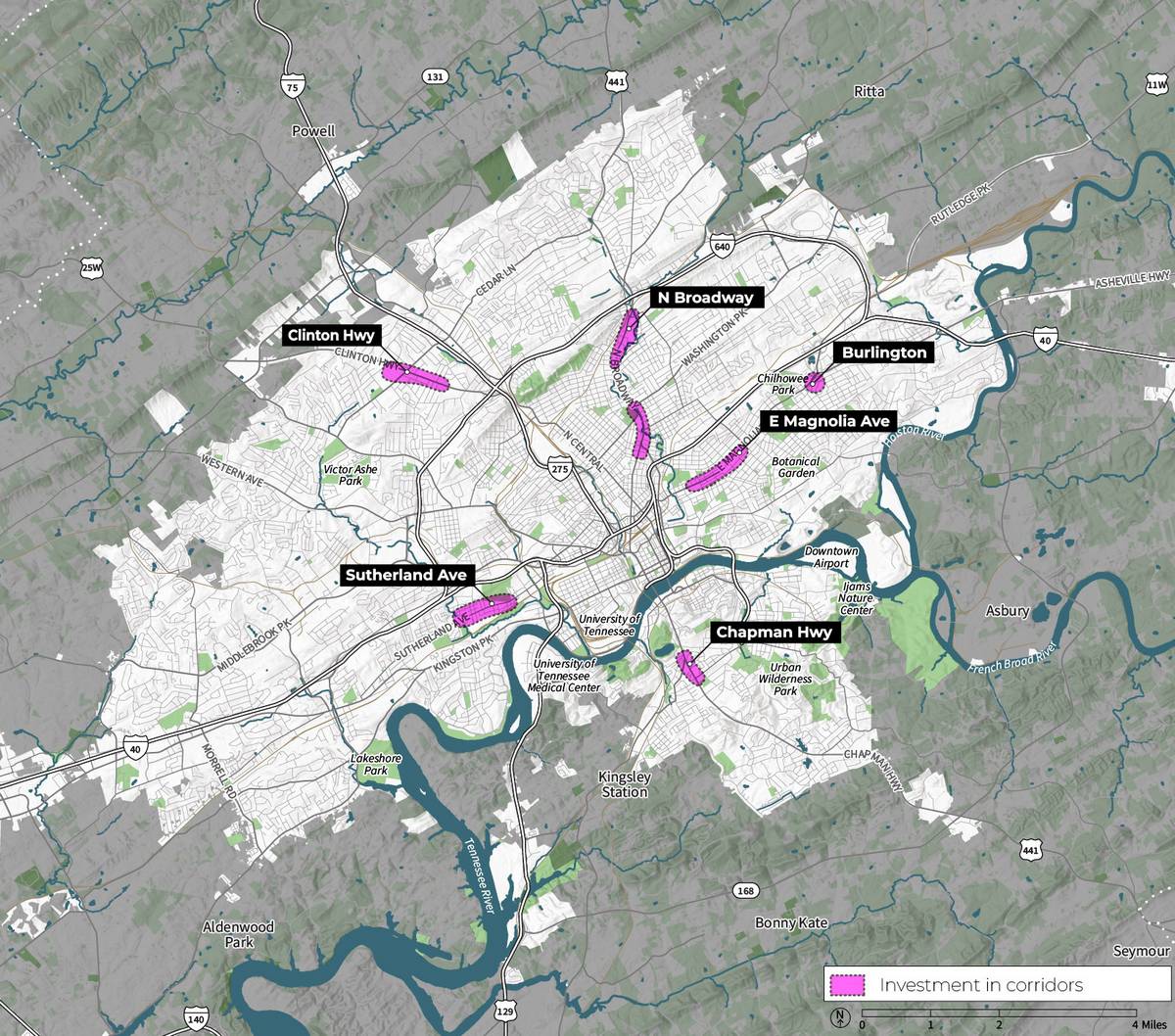
Place types
Cost: $$$$-$$$$$
$=Minimal - $$$$$=Very High
- High level of public investment for potential site assembly, cleanup, infrastructure and more that will impact property taxes and utility costs, but has potential to significantly increase tax base over time
Impacts on our city
- Increases number of housing units, mostly in large apartment buildings
- Concentrates growth along corridors where higher-frequency transit, walking and biking investments can be most effective
- Increases the need for new parks and public spaces in and around these corridors
- Opportunity to upgrade older commercial spaces for new office and mixed use
Scenario #3: Neighborhood Infill A
Policy changes to expand small-scale multi-unit housing by right in areas with infrastructure and assets
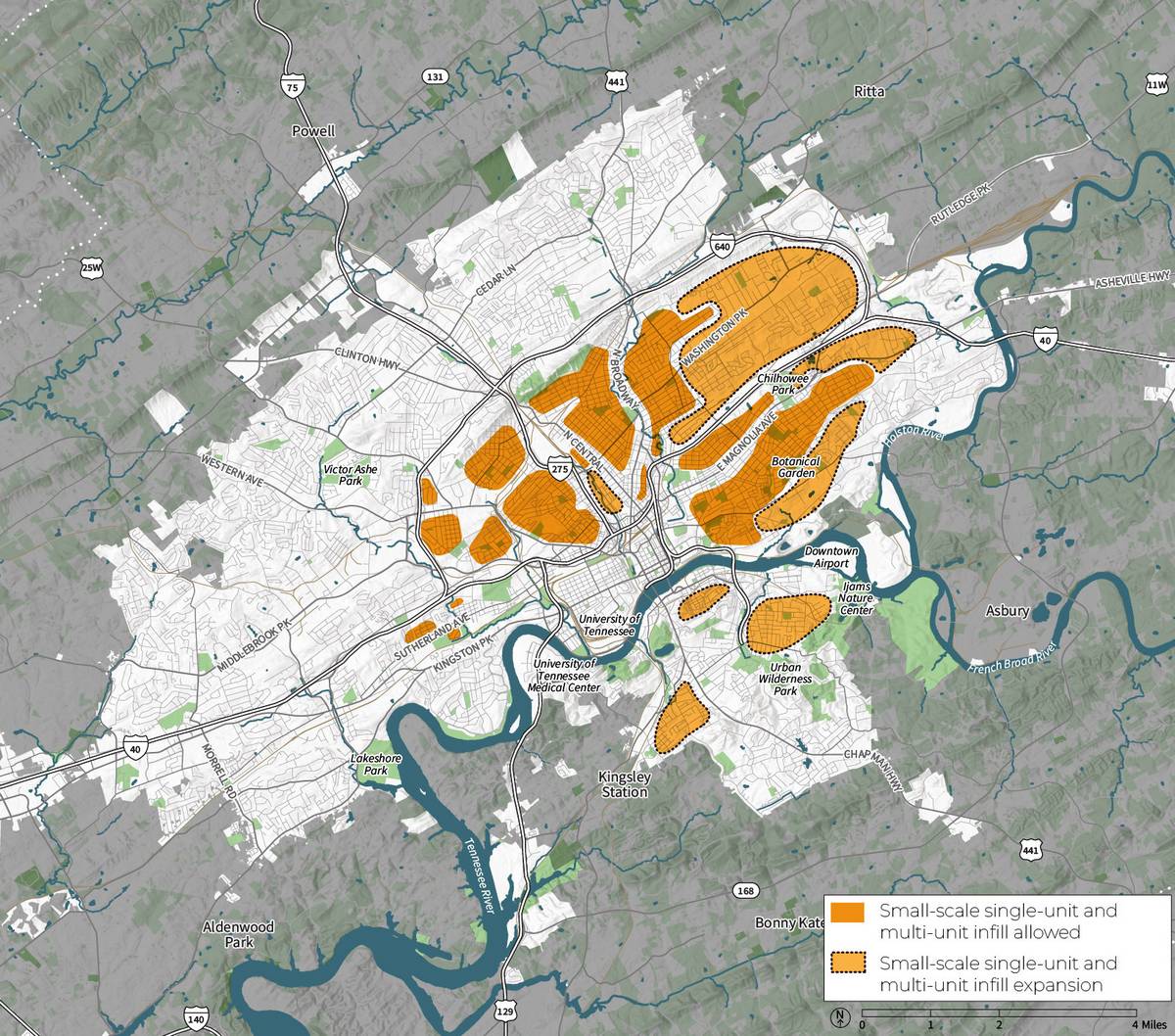
Place types
Cost: $-$$
$=Minimal - $$$$$=Very High
- Some level of public investment for potential infrastructure and city services with increase to tax base and higher net revenue generation over time.
Impacts on our city
- Provides greater range of housing types and choices for young professionals, families, and those looking to age in place
- Provides more households to support small, neighborhood businesses
- Supports complete neighborhoods where more daily needs can be met without using a car
- Focuses on existing developed areas to help preserve undeveloped, natural areas
- Will require fewer new parks
Scenario #4: Neighborhood Infill B
Policy change to allow a gentle increase in housing units through accessory dwelling units with a focus on single-unit development but with allowances for smaller lot sizes. In addition, allows small-scale multi-unit housing by right on designated secondary corridors.
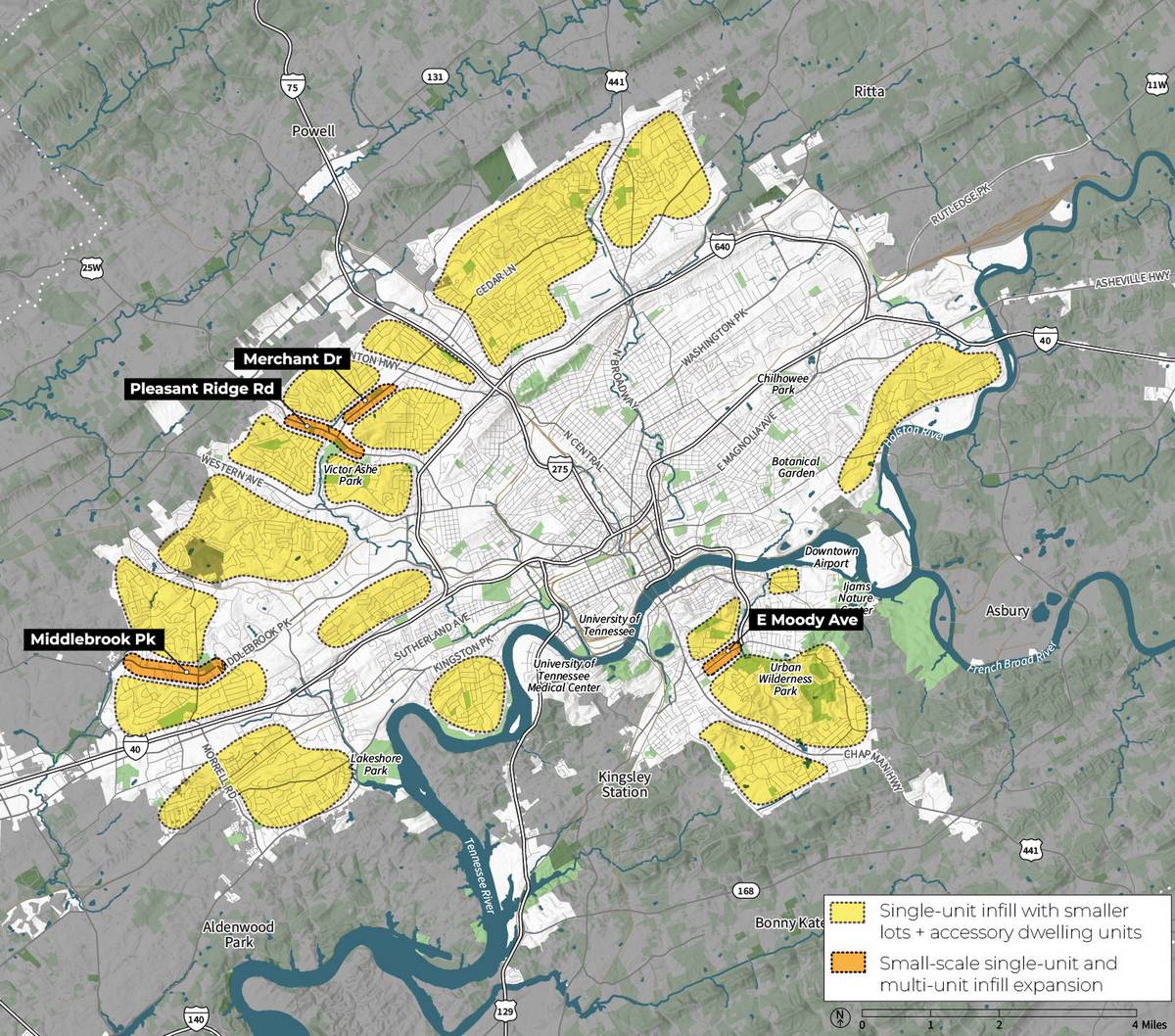
Place types
Cost: $
$=Minimal - $$$$$=Very High
- Minimal public investment for potential infrastructure and city services with minimal increase to tax base.
Impacts on our city
- Provides greater range of different housing types, including single-unit starter homes and smaller homes for those looking to downsize or age in place
- More households to support new neighborhood businesses along secondary corridors
- Provides less support for major transit expansion
- Focus on existing developed areas to preserve undeveloped, natural areas
- Will require new parks in underserved communities
We want to ensure all of us, including the next generation, can thrive in Knoxville over the next 25 years.